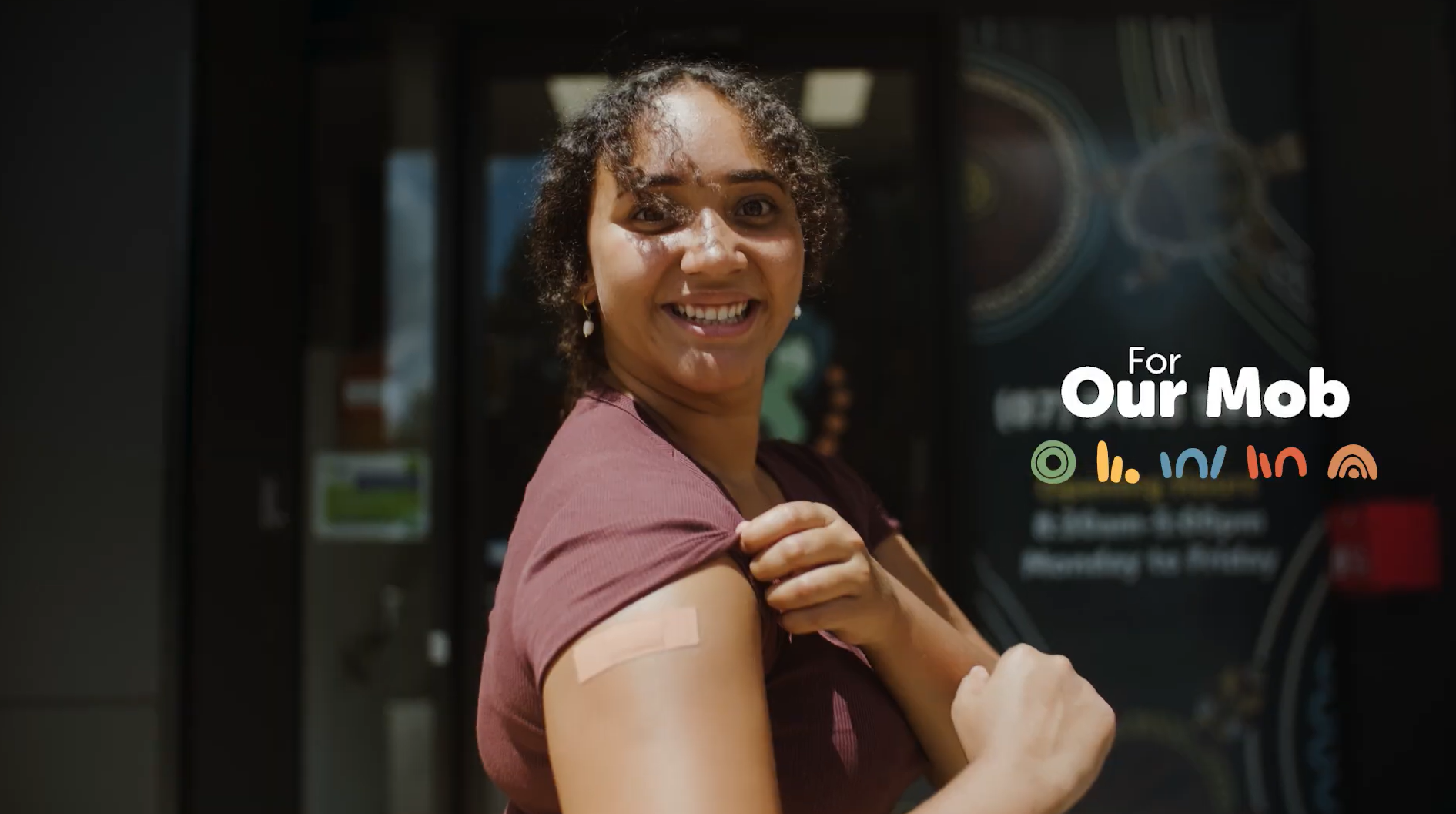
For our Mob – stay safe from flu this season
Influenza (flu) is a highly contagious respiratory illness caused mainly by influenza A and B viruses. It affects the nose, throat and lungs and can range from mild to severe illness.
Get your flu shot or FluMist today!

Flu Facts
What is the flu?
Influenza (flu) is a highly contagious respiratory illness caused mainly by influenza A and B viruses. It affects the nose, throat and lungs and can range from mild to severe illness. It is more serious than the common cold and can lead to complications such as pneumonia, sepsis, and in severe cases, hospitalisation. It can occur any time of year, but is most common during the autumn and winter months.
The flu is the leading cause of hospitalisation in our communities. To prevent going to hospital, we strongly recomment early vaccination for all our Mob aged six months and over.
How does the flu spread?
Flu spreads easily through:
- droplets in the air when someone coughs or sneezes
- touching contaminated surfaces and then touching your eyes, nose or mouth.
People with the flu can spread it before they feel sick and while symptoms continue.
Who is most at risk?
The flu can be serious for anyone, but especially for:
- Elders and older adults
- pregnant people
- people with chronic health conditions
- young children (jarjum).
Children under 5 are at higher risk of complications such as pneumonia.
How is it diagnosed and treated?
Your GP may confirm flu with a nose/throat swab.
Most people recover at home by:
- drinking plenty of water
- resting
- taking medication for pain/fever if needed.
Seek medical care if symptoms get worse, you have trouble breathing, or you are in a higher‑risk group. Some people at higher risk can receive antivirals but should speak with their GP to check eligibility.
When should I get the flu shot?
We recommend getting the flu shot every year because the strains of the virus change each year. You should get the flu shot any time from April, to be ready for peak flu season. Peak flu season is usually between June and September but can be earlier.
It’s never too late to get vaccinated, since the flu circulates all year round. The new season flu shots are re-formulated each year to match the circulating strains as closely as possible.
What are the symptoms?
People with the flu may experience some or all of the following:
- cough, sore thoat, runny or stuffy nose
- feeling extremely tired
- fever and chills
- muscle aches, joint pain, and headaches
- nausea, vomiting, or diarrhoea (more common in children)
Symptoms may last more than a week, and some people may become very unwell and need hospital care.
What are the risks of the flu?
The flu can be serious and can cause death. Our Mob is at high risk of getting crook with the flu. Complications, such as difficulty breathing and needing to go to hospital are more likely among our Old People, jarjum under 5 years old, pregnant people and people with other health issues, such as lung and heart conditions and diabetes.
How can I prevent the flu?
You can help protect yourself and Community by:
- getting vaccinated every year
- staying home if feeling unwell, and especially avoiding high-risk settings such as aged care and childcare
- calling your doctors’ surgery ahead first if you are unwell – they will advise what to do to see a doctor safely
- covering coughs and sneezes with your elbow
- avoiding contact with people who have cold and flu symptoms – wear a mask if you cannot distance from people who show these symptoms.
- washing hands regularly with soap and water
- keeping surfaces clean.
It’s never too late to get vaccinated, since the flu circulates all year round. The new season flu shots are re-formulated each year to match the circulating strains as closely as possible. If you are pregnant, the flu shot will also protect your bub against flu when bub is born, as they cannot get the flu shot before 6 months old.
Who can get the flu vaccine?
The flu vaccine is free for Aboriginal and Torres Strait Islander people 6 months and older.
If you are pregnant, the flu shot will also protect your bub against flu when bub is born, as they cannot get the flu shot before 6 months old.
Even if you have recently been crook with the flu, we still recommend getting the flu shot after you are feeling well again. Getting the flu shot lowers the chance of needing to go to hospital, and can lower your risk of catching other strains of the virus.
If you are due for your COVID or RSV shot (or both), you can receive the flu shot at the same visit. The best way to protect against both infections is to make sure you have had both shots.
Where can I get the flu shot?
Your local Aboriginal and Torres Strait Islander Health Service, as well as many local chemists provide the flu shot. If you go to your GP, also ask them about any other vaccines that you may be eligible for to stay healthy.
Flu vaccination at IUIH Network clinics
IUIH clinics provide culturally safe flu vaccination for Community. Also sing out to us about vaccines for other respiratory viruses, including RSV and COVID-19. RSV vaccines are available free of charge for Mob over 60 and everyone over 75.
Free flu vaccines are available between 1 March – 30 September 2026 to all Queensland residents. If you get your vaccination at an IUIH or Network clinic you will have the choice of a:
- tote bag
- water bottle
- socks
- kids’ crayons
- kids’ bubbles
Incentives will be available while stocks last.
To book, contact your local clinic.


FluMist – new for 2-17 year-olds
What is FluMist?
FluMist is a nasal spray flu vaccine (not a shot), administered by a health worker that helps protect against seasonal flu.
FluMist is new in 2026 and may assist with young ones who are distressed by needles. It has been used in the UK, USA, Canada, and some European countries for over 10 years.
Who should NOT receive FluMist?
Jarjum aged 2-17 years should not receive FluMist if they are moderately or severely immunocompromised. Speak to your doctor or health practitioner if you are not sure.
When should my jarjum get FluMist?
It’s best to get FluMist early in the season. We recommend that you get it as soon as it’s available, in April. However, it’s not too late to vaccinate later in the season, even in the middle of winter.
Who can receive FluMist?
Jarjum aged 2-17 years old. FluMist is not suitable for bubs under two years old.
What are the benefits of FluMist for jarjum?
FluMist provides a needle-free option for the flu vaccine, which helps if your jarjum is scared of needles. Little ones can become seriously ill from flu. Our little ones can get sick easier, they play a key role in spreading the flu to parents, Elders, siblings, school, daycare and kindy if they get it.
Annual flu vaccination significantly reduces the risk of severe flu illness, especially for jarjum 5 and under.
What are the possible side effects of FluMist?
Most side effects are mild and short‑lived. These may include:
- mild fever
- runny or stuffy nose
- sneezing
- sore throat

Key takeaways
- FluMist is safe and effective for healthy jarjum ages 2–17 years.
- It offers a needle-free alternative to flu shots.
- Not suitable for children who are moderately or severely immunocompromised.
- Annual flu vaccination helps keep jarjum healthy and limits the spread.